
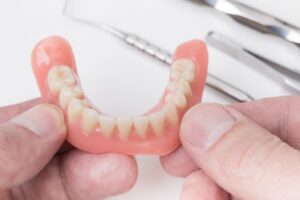
Denture-wearers place a lot of faith in their prosthesis, and when they fit poorly, it can be a real pain in the neck. But it’s more than a feeling – a poor-fitting denture can cause real, tangible problems for patients who rely on them for eating, speaking, and smiling with pride. Continue reading to learn about 5 potential complications.
1. Sore or Irritated Gums
One of the most common signs of poorly fitting dentures is sore or irritated gum tissue. Dentures that rub against the gums can create pressure points, leading to redness, tenderness, and even painful sores.
Continuing to wear an appliance that repeatedly irritates the same area can make the problem worse. If your gums are consistently sore after wearing your dentures, have your dentist check the fit rather than simply putting up with the discomfort.
2. Difficulty Eating
Dentures should help you chew your food, not make eating a struggle. Loose dentures may move around when you bite or chew, making it difficult to comfortably eat certain foods.
You may find yourself avoiding foods that are harder to chew or cutting everything into unusually small pieces. Over time, a limited diet may affect your ability to get a variety of nutrients.
A properly fitted denture can provide better stability and make eating more comfortable.
3. Speech Problems
Your teeth, tongue, and dentures work together when you speak. If a denture shifts unexpectedly, you may notice changes in pronunciation or develop a clicking sound while talking.
You might also become self-conscious about speaking in front of others. While some adjustment is normal when you first receive dentures, new or worsening speech difficulties can indicate that your dentures need to be evaluated.
4. Denture Slipping
Loose dentures can move when you laugh, cough, sneeze, speak, or eat. Lower dentures can be particularly prone to movement because the tongue and muscles of the mouth are constantly active.
Some people rely heavily on denture adhesive to compensate for a poor fit. While adhesive can be useful in certain situations, it shouldn’t be considered a permanent solution for dentures that no longer fit properly.
5. Changes to Your Oral Tissues
The jawbone naturally changes after tooth loss, and these changes can affect how dentures fit over time. As the supporting bone gradually shrinks, a once-comfortable denture may become loose.
An unstable denture can place uneven pressure on the tissues of your mouth and contribute to ongoing irritation. Regular dental visits allow your dentist to monitor these changes and determine whether your dentures need an adjustment, reline, repair, or replacement.
Dentures shouldn’t constantly hurt, slip, or interfere with everyday activities. If your dentures have become uncomfortable or unstable, schedule an appointment with your dentist so they can diagnose the problem, provide a solution, and get you back to eating and speaking with confidence!
About the Practice
Drs. Daniel and Joel Eley’s roots run deep in the Melbourne community; they’re the third generation in their family to be born and raised here! They care about the health and well-being of their patients by bringing more than 20 years of collective experience to comprehensive dental care under one roof. For more information, contact Eley Family Dentistry online or call (321) 622-8711.